Some people are paid weekly. Others are paid fortnightly. Many households deal with irregular expenses, seasonal bills, subscriptions, school costs, insurance renewals, and unexpected purchases that don't conveniently align with the first day of the month.
Modern budgeting should adapt to how people actually manage money. That's the philosophy behind NorthVault.
Budgeting starts with categories
At its core, budgeting is simply assigning purpose to your money.
Most people naturally think about spending in categories:
- Groceries
- Utilities
- Fuel
- Dining out
- Entertainment
- Insurance
- Mortgage or rent
- Travel
- Health
By organising transactions into categories, it becomes easier to understand where money is going and whether spending aligns with priorities.
A category-based budget creates a framework for making decisions rather than simply recording transactions after the fact. Instead of asking, "Where did all my money go?", you can start asking, "Am I spending according to my plan?"
Why monthly budgets don't work for everyone
Many budgeting tools assume everyone budgets monthly. For some people that's perfectly reasonable. For others it creates unnecessary friction.
Consider someone paid every second Wednesday. A monthly budget may split income across multiple calendar periods, making it difficult to understand how much money is available between paydays.
Similarly, someone paid weekly may experience four-pay months and five-pay months throughout the year. The result is often confusion rather than clarity.
A budgeting system should work with your income cycle, not against it. Calendar months are useful for reporting, but they are not always the best way to plan everyday spending.
Budgeting around your salary cycle
One of the most practical approaches to budgeting is aligning budgets with the way income actually arrives.
Rather than forcing spending into calendar months, salary-cycle budgeting creates periods based on your pay schedule.
This allows you to:
- Compare spending against available income
- Plan expenses between paydays
- Understand remaining budget before the next pay arrives
- Reduce the feeling of running out of money at the end of a month
For many households, budgeting by salary cycle provides a clearer picture of financial reality than a traditional monthly budget.
Flexible budget periods
Different people manage money differently. That's why NorthVault supports multiple budgeting periods, including:
- Weekly
- Fortnightly
- Monthly
- Quarterly
- Yearly
- Custom periods
- Salary-cycle budgeting
The goal isn't to force a single budgeting method. The goal is to allow people to choose the approach that best matches how they earn, spend, and plan.
Budgeting isn't just about limits
Traditional budgeting tools often focus exclusively on spending limits. While limits can be useful, budgeting is really about awareness.
Understanding what has been spent, what remains available, which categories are under pressure, and whether spending patterns are changing over time is often more valuable than simply displaying a warning when a category exceeds a target.
Small adjustments made consistently usually have a greater long-term impact than strict short-term restrictions.
Tracking progress over time
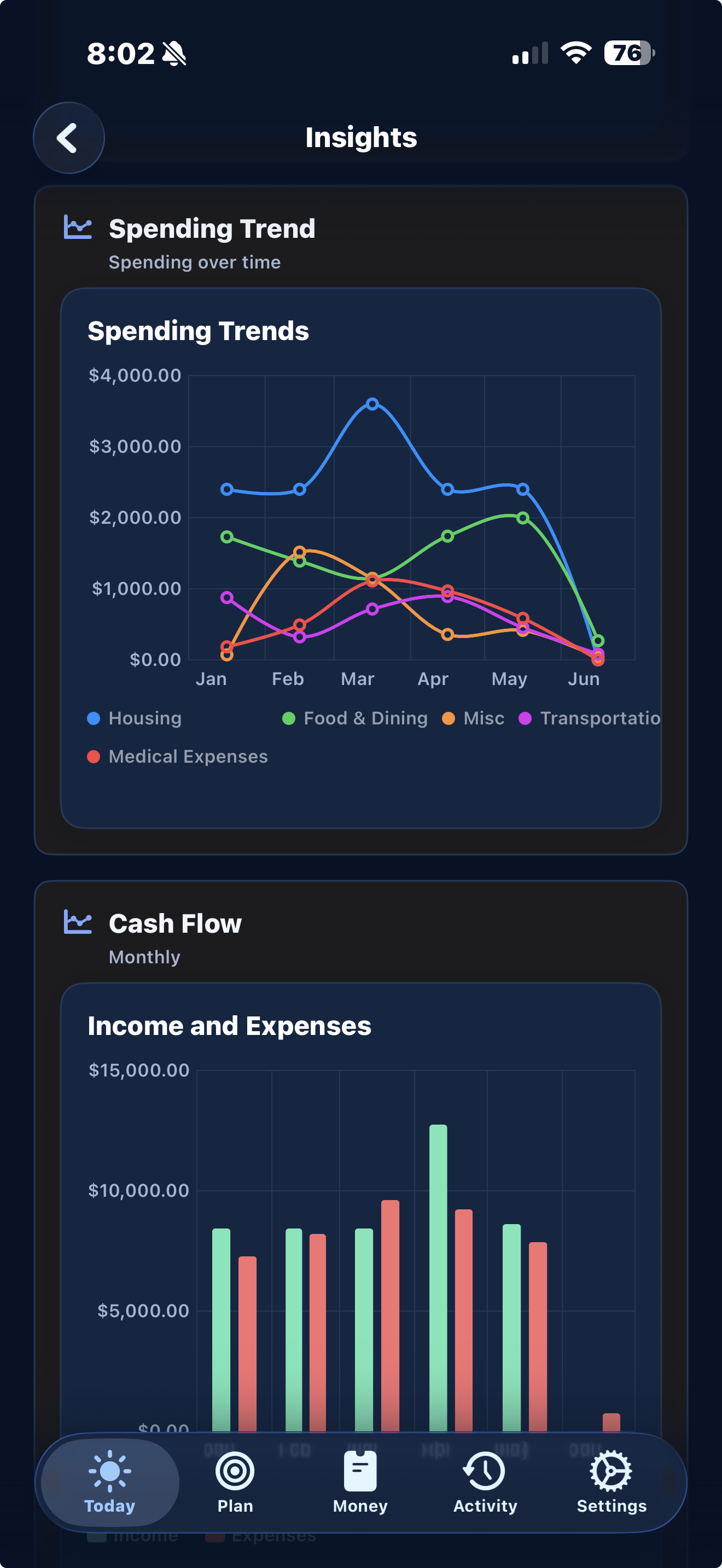
Budgets become more useful when they are viewed as an ongoing process rather than a one-time setup.
As transaction history grows, patterns begin to emerge:
- Recurring expenses become easier to identify
- Seasonal spending becomes more predictable
- Savings opportunities become more visible
- Budget estimates become more accurate
Over time, budgeting shifts from guesswork to informed decision-making.
Budgeting and wealth tracking together
A budget shows how money moves. Net worth shows where money accumulates. Both perspectives matter.
Spending less than planned is valuable, but understanding how that contributes to savings, investments, debt reduction, and long-term wealth provides a more complete picture.
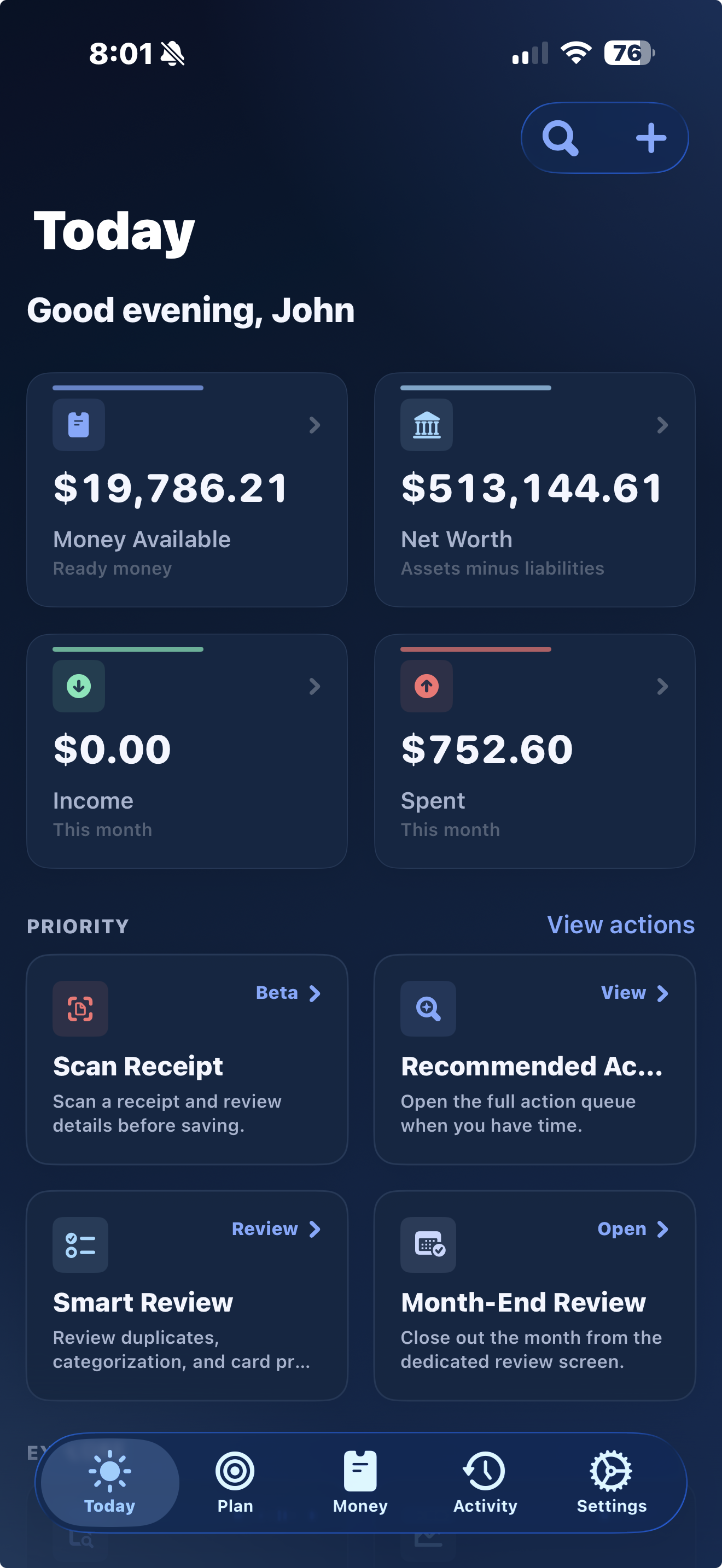
That's why NorthVault combines budgeting with transaction tracking, asset and liability management, net worth tracking, savings goals, and investment records in a single iPhone app.
Rather than treating budgeting as a separate activity, it becomes part of a broader view of personal finances.
A simpler approach to personal finance
Budgeting doesn't need to be complicated.
Whether you prefer weekly budgets, fortnightly salary-cycle planning, or traditional monthly tracking, the most effective system is often the one you'll actually use consistently.
NorthVault was built around that idea: helping people organise their finances with flexible budgeting, clear transaction tracking, wealth visibility, and user-controlled data ownership.
No mandatory bank linking. No advertising-driven business model. No account required for core use. Just a private, Apple-native approach to understanding your money.